

Used CNC Machines with Automation
Automation means the machine keeps cutting when nobody stands next to it. A pallet changer swaps two pallets. A pallet pool holds several and runs them in sequence. A robot cell picks single parts instead of pallets.
We trade in used CNC machines that already carry this automation. Our own technicians inspect and document every machine before sale, the loading cycle included. Delivery, installation and commissioning come from us on request.
Which automated CNC machines are currently available?
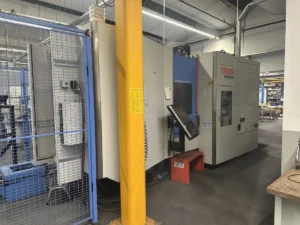
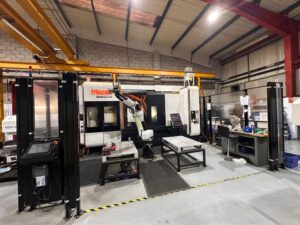
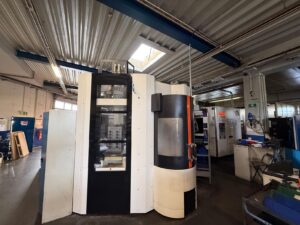
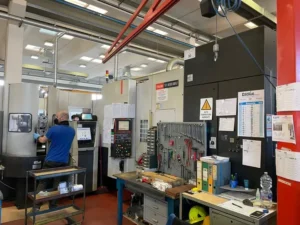
What you get when you buy from us
Every machine is inspected and documented by our own technicians before it goes on sale. Purchase, transport, installation, commissioning, service and financing all come from one place.
You always speak to the same person — from the first enquiry to the first chip in your shop.
We buy used machines
We buy your used machine at a fair price and quickly.
Service and repair
In-house technicians for control, spindle and mechanics.
Transport and commissioning
Dismantling, transport and start-up, training included.
Financing and leasing
Flexible purchase financing — hire purchase is possible.
Machine request
Looking for a specific size or control? We will find it.
What automation adds to a CNC machine
Forms of automation
Typical use
What automation also needs
What limits the part
Two-pallet changer or pallet pool — which one do you need?
A two-pallet changer swaps between two pallets. You set up the next part outside while the machine cuts inside. That removes most of the idle time between parts. It is also the cheapest step into automation.
A pool needs an order list, its own program management and matching fixtures on every pallet. That effort only pays when the machine is meant to run without an operator. Which of the two fits follows from your shift model: setup during cutting, or production through the night.
When does a robot cell beat pallets?
The gripper decides, not the spindle. A cell pays off when the parts are many, alike and light enough to be picked one by one. Repeat work in large batches is the classic case.
With changing parts the picture flips. Every new part needs a new gripper, a new part magazine and fresh teaching. Pallets take mixed work better, because the fixture carries the difference, not the robot.
What else does the machine need before automation pays?
Loading is only half of it. The machine has to hold its own for the whole run. That starts with the tool magazine. It has to cover the complete part family, including replacements for worn edges.
Add tool breakage control, a probe and a chip conveyor that does not clog. Without breakage control the cell keeps cutting with a broken tool. It then makes scrap for hours instead of stopping.
Can automation be added later?
Partly. Many machines leave the factory with a robot interface or a pallet interface already in place. That shows in the machine data. Without it, retrofitting gets expensive fast.
So check the interface before you buy, even if automation is two years away. The control counts too: it has to exchange signals with the cell and manage the programs per pallet. A machine without that groundwork stays a stand-alone machine.
| What to look at | Why it matters |
|---|---|
| Number and size of pallets | Pallet count drives the possible run time, pallet size the largest workpiece. |
| Permitted pallet weight | Counts the part plus its fixture, not the raw part alone. |
| Tool magazine | Check the size actually fitted, not the maximum the series offers — magazines were an option on most of these machines. |
| Tool breakage and tool life control | Needs a defined reaction when a tool fails: stop the machine, or swap and continue. |
| Probe | Measures the part in the machine, so drift is caught before the next pallet starts. |
| Chip conveyor and coolant supply | Chip volume and coolant level have to cover the full planned run time. |
| Robot interface and control | Decides whether the cell can be extended later. |
| Floor space and access | Plan the footprint with guarding, part magazine and the operator door, not the machine outline. |
The concrete figures for every available machine are in the list above and on the machine page.
Which level of automation fits your production?
The batch decides, not the technology. Three things set the level: how long a part runs, how many follow, and how often the part changes.
Mixed parts in small batches: a two-pallet changer. Few parts in long runs: a pallet pool or a robot cell. Bar work: a bar feeder, and the automation already sits in the lathe.
Then add up the hours. A system that stands still at night rarely earns its price. The level that pays is the one that fills the hours you actually run.
Frequently asked questions — CNC automation
How much does a used CNC machine with automation cost?
There are no list prices on the used market. The price follows year, control generation, running hours, spindle and guideway condition and the automation itself. A two-pallet changer sits in a different class than a pallet pool with a robot. We quote the specific system in writing, with machine data and a condition report, so you can compare it.
What condition are the machines in and how do you check them?
On a pallet system we check pallet seating and clamping, the repeatability of the changer and the zero-point references. On a robot cell we test the gripper, the part magazine, the guarding and every interlock. Running hours are read wherever the control still shows them. Findings go into the machine file, with photos. Most machines can be seen under power by appointment. On a cell that is the only way to judge the full cycle.
How many pallets do I actually need?
Multiply the cycle time per pallet by the number of pallets. That is how long the machine runs on its own. Two pallets bridge a break, not a night. A pool carries a full unattended shift, provided every pallet is loaded and every program is released. Short cycle times use up pallets fast, so calculate from your own part, not from the pallet count.
Who dismantles and re-installs a cell?
We do. Before dismantling we document cable routing, media connections, the control link and the robot's zero position. Robot, magazine, guarding and safety technology travel as one unit. At your site the cell is rebuilt in the same order and put back into operation. Your operators are instructed at the machine.
Is financing or leasing possible?
Yes. We arrange purchase financing, leasing and lease purchase through our finance partners. Terms depend on credit standing, machine age and investment size. This matters most when the system should already be producing before it is paid off.
What if the right system is not in the list?
Then we search for you. Give us machine type, pallet count, tool magazine size, control and year range. We place the request in our worldwide network. As soon as something fits, you get the specification, photos and a note on what the system still needs.
Matching series and manufacturers
Direct route to the series, the manufacturers and the rest of the stock.
Find automated CNC machines
Call us or send five lines: cycle time, batch size, shift model, part weight and the largest part size. That is enough for a first proposal on which system fits. If nothing fits, we say so.