

Used CNC lathes and turning centers for sale
On a CNC lathe the workpiece rotates and the tool stays fixed. That is how round parts are made, from short chuck parts to long shafts. A turning center adds driven tools in the turret. Turning, drilling and milling then run on one machine.
We trade used CNC lathes and turning centers from industrial machine parks. Our own technicians inspect and document every machine before it goes on sale. On request we handle delivery, installation and commissioning, with operator training at the machine.
Which CNC lathes are currently available?
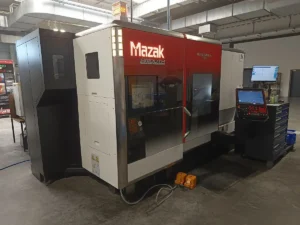
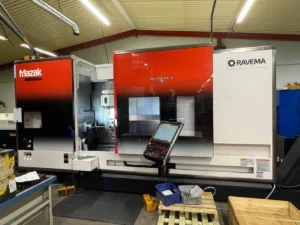
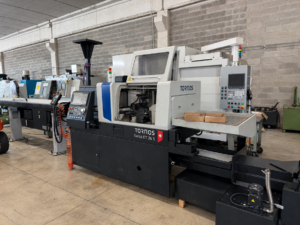
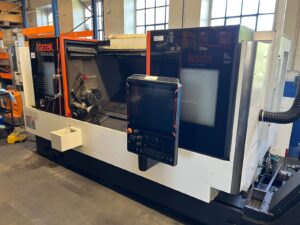
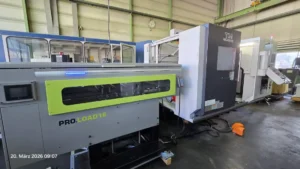
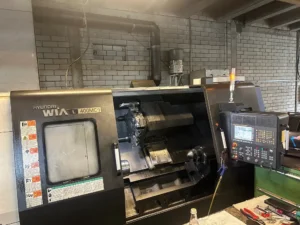
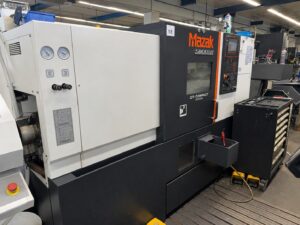
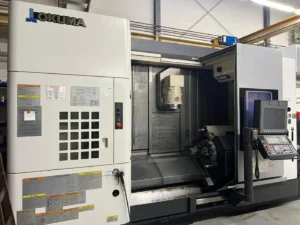
What you get when you buy from us
Every machine is inspected and documented by our own technicians before it goes on sale. Purchase, transport, installation, commissioning, service and financing all come from one place.
You always speak to the same person — from the first enquiry to the first chip in your shop.
We buy used machines
We buy your used machine at a fair price and quickly.
Service and repair
In-house technicians for control, spindle and mechanics.
Transport and commissioning
Dismantling, transport and start-up, training included.
Financing and leasing
Flexible purchase financing — hire purchase is possible.
Machine request
Looking for a specific size or control? We will find it.
What sets a CNC lathe apart
Machine type
Typical parts
Typical equipment
Common controls
Lathe or turning center — do you need driven tools?
A plain CNC lathe turns, and every milled feature has to go somewhere else. In a turning center the turret stations carry their own drive. Drills and mills then cut while the main spindle holds the part. Cross holes, flats and slots come out in the same setup.
The gain is not only time. Every new setup on another machine means clamping the part again, and each re-clamp brings its own alignment error. When the part stays in the chuck, those errors do not occur. That is often what makes a separate milling machine unnecessary.
Chuck parts or shafts — what sets the machine size?
Three figures frame the working area: max. turning diameter, max. turning length and the swing over the bed. The swing sounds generous, but the turret needs room above the part. What counts in daily work is the diameter you can still cut.
For shafts the tailstock travel counts as well. Measure your longest and your largest part before you read any machine data. A part that only just fits leaves no room for the fixture.
When do a Y axis and a counter-spindle pay off?
Without a Y axis every milled feature sits on the center line. The Y axis moves the tool off center, and that is what keyways, flats and hole circles need. The counter-spindle picks the part off during the cycle and machines the back side.
Together they can finish a part without a second clamping by hand. Both raise the purchase price and the service effort. With small and medium batches the saved setups usually cover that. On simple turned parts that same money sits idle in the machine.
What does bar capacity mean for your production?
Bar capacity decides whether you can produce from bar stock at all. Below that limit the bar runs through the main spindle and the machine keeps cutting. Above it, someone has to stand at the machine and load blank by blank.
Bar work also needs a bar feeder. Whether one belongs to a machine is listed in its equipment, not on this page. Plan the space beside the machine as well, because the feeder needs the full bar length.
| What to look at | Why it matters |
|---|---|
| Max. turning diameter and max. turning length | The nominal size of the part. Chuck jaws and the tailstock reduce both figures in practice. |
| Swing over the bed | The largest diameter that can rotate over the bed. Some data sheets also give the smaller swing over the cross slide. |
| Tailstock travel | Decides which shaft lengths you can still support between centers. |
| Bar capacity | The largest bar diameter that fits through the spindle bore. Buying tolerance eats into it. |
| Turret stations | How many tools stand ready without a setup stop. Sister tools take real stations. |
| Driven tools | Check the drive power and the speed range, not only whether the turret has them. |
| Main spindle power and torque | Power for stock removal, torque for large diameters and steel. |
| Control | Decides who can program the machine. A control your team does not know costs weeks before output is back to normal. |
The concrete figures for every available machine are in the list above and on the machine page.
Which CNC lathe fits your parts?
CNC lathe, turning center or lathe with driven tools — what decides is your part, not the name on the machine.
Take the part you run most often. If it comes off the lathe finished, a two-axis machine with a solid turret is enough. If it moves on to another machine afterwards, driven tools belong on your list. Shafts and chuck parts then split the field. Shafts need tailstock travel, chuck parts need swing and turret stations.
Power and spindle speed come last. A strong main spindle is no help if the part does not clear the bed.
Frequently asked questions — CNC lathes
What does a used CNC lathe cost?
There are no list prices on the used market. The price follows the year, the control generation and the running hours. Wear counts as much as age. Spindle and guideway condition move the price in both directions, and so does the equipment. Driven tools, a Y axis and a counter-spindle show up clearly. We quote every machine in writing and list what is on it, so you can compare offers.
What condition are the machines in and how do you check that?
Every machine goes through our workshop before it is listed, and what we find is written down. On a lathe we run the main spindle through its speed range and listen for bearing noise. We index the turret through all stations, check that it clamps, and turn the driven tools under load. The guideways get moved over the full travel, and we look at the tailstock, the chuck and the chip conveyor. Where the control still shows running hours, we note them. Many machines can be seen under power by appointment.
Can I produce from bar stock?
Yes, when your material stays inside the bar capacity of the machine. That figure is in the machine data of every listing, so you can check it against your stock list. A bar feeder is a separate question, because not every machine comes with one. Send us your bar diameter and your material, then we filter the list for you.
Do you handle transport and installation as well?
Yes. We handle removal at the old site, transport, positioning and commissioning. We also train your operators on the machine. You get one contact person for the whole move. Before delivery day we go through the access route, the crane and the connections with you. If you have your own crew, you can also book single steps.
Is financing or leasing possible?
Yes. We arrange purchase financing and leasing through our finance partners, lease purchase included. The terms depend on your credit standing, the age of the machine and the size of the investment. This helps most when the machine has to earn money before it is paid for.
What if the right lathe is not in the list?
Then we start a search for you. Tell us what the part looks like and which equipment you need. Add the control your team programs and the year range you have in mind. We put that specification out through our worldwide network. As soon as a matching machine comes up, we come back with the machine data and a technical assessment.
Matching series and manufacturers
Direct route to the series, the manufacturers and the rest of the stock.
Find the right CNC lathe
Call us or send us four lines: turning diameter, turning length, material, and whether you work from bar stock. That is enough for a first shortlist. We answer with the machines that fit and what they cost.