

Used CNC Milling Machines for Sale
On a CNC milling machine the tool rotates and the workpiece stays clamped. That is how you get flat faces, bores, pockets and contours on prismatic parts. Vertical machines carry the spindle upright. Horizontal machines lay it on its side, so chips fall clear of the part.
We trade used CNC milling machines and machining centers from industrial machine parks. Our own technicians inspect and document every machine before it goes on sale. On request we handle delivery, installation and commissioning, including instruction at the machine.
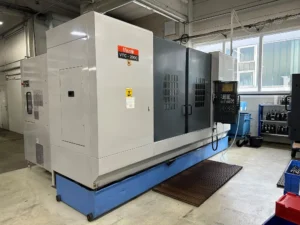
Which vertical machining centers are currently available?
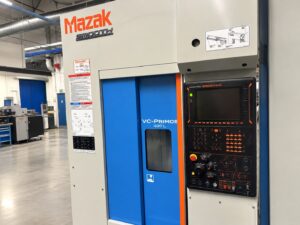
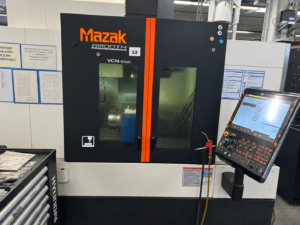
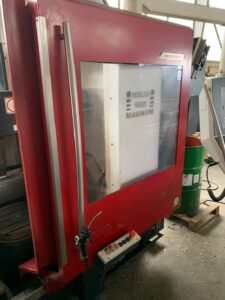
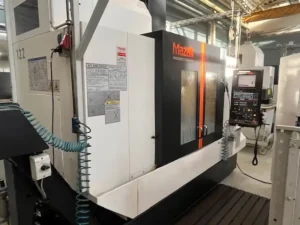
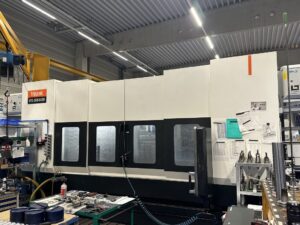
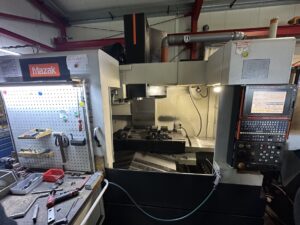
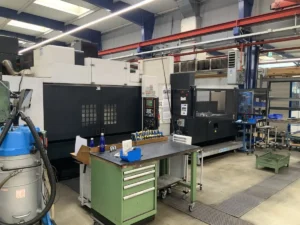
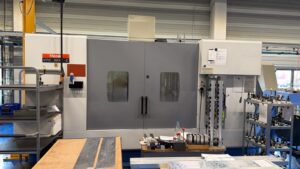
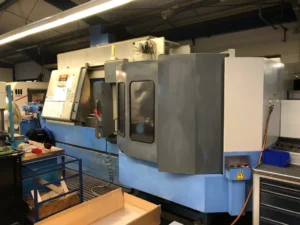
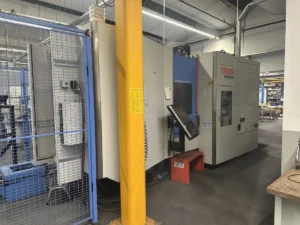
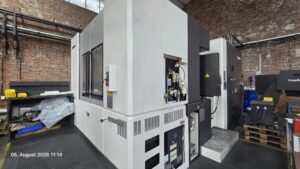
Which horizontal machining centers are currently available?
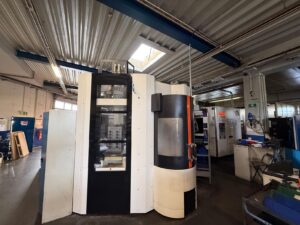
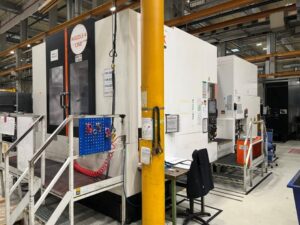
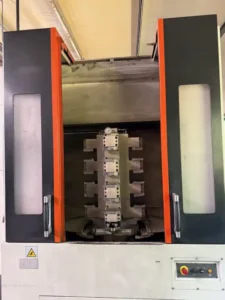
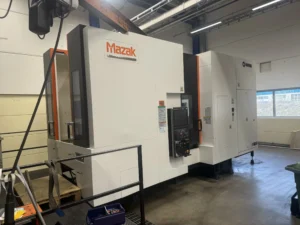
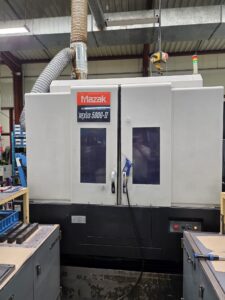
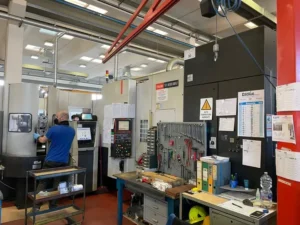
What you get when you buy from us
Every machine is inspected and documented by our own technicians before it goes on sale. Purchase, transport, installation, commissioning, service and financing all come from one place.
You always speak to the same person — from the first enquiry to the first chip in your shop.
We buy used machines
We buy your used machine at a fair price and quickly.
Service and repair
In-house technicians for control, spindle and mechanics.
Transport and commissioning
Dismantling, transport and start-up, training included.
Financing and leasing
Flexible purchase financing — hire purchase is possible.
Machine request
Looking for a specific size or control? We will find it.
What defines a CNC milling machine
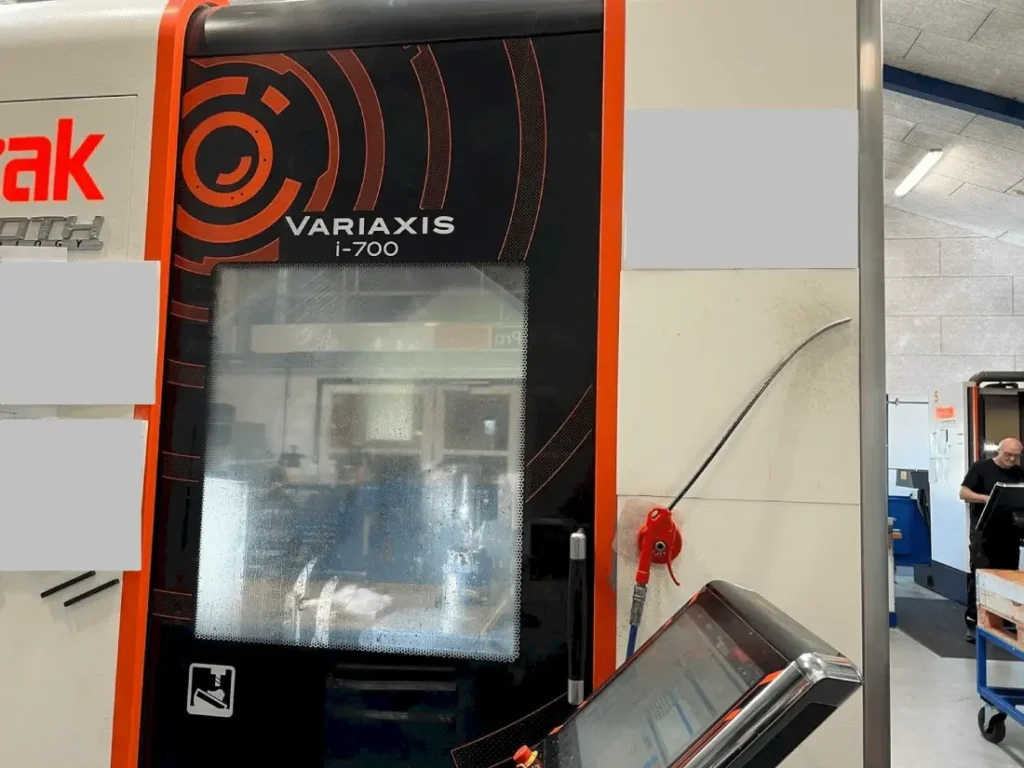
Design
Typical parts
Workpiece handling
Typical tool taper
Vertical or horizontal machining center — which one fits your production?
On a vertical machine the main spindle stands upright. You load from above, you see the cut, and the entry price is the lowest. That suits flat parts, one-offs and small batches. Chips settle on the workpiece, so someone has to flush them off.
On a horizontal machine the main spindle lies flat. Gravity takes the chips out of the work area and onto the chip conveyor. The part stays reachable from several sides. Most machines of this design come with a pallet changer, but not all. Check the machine data before you plan around it.
How big can the part be — table, travels or pallet?
Travels alone say little. Z travel is counted from the spindle nose, so a long tool eats into the height you thought you had. Check the longest tool of the job against it, not just the part.
On horizontal machines the machine data lists a work envelope as diameter and height above the pallet. Hold your tallest clamp against that figure. And leave room to the edge: a part that fills the pallet exactly leaves no surface for the clamps.
How many tool pockets do you really need?
Count the tools of your most complex job first. Then add sister tools for everything that wears within a shift. Whoever swaps tools in the middle of a series loses the time the machine was bought to save.
For unmanned shifts the rule is simple. The tool magazine has to carry the whole run. Tool breakage monitoring belongs with it. Without it the machine keeps cutting scrap after a cutter snaps.
SK-40 or SK-50 — what does the taper mean for your tooling?
SK-40 and SK-50 are steep taper sizes to DIN 69871. SK-40 holders weigh less and swap quickly, which suits medium parts and high spindle speeds. SK-50 puts more torque into the cut and stands up to heavy roughing with large cutters. A machine built around the bigger taper is heavier and stiffer in the frame.
The bigger question is your own tool stock. A shop running SK-40 today would have to buy holders again for an SK-50 machine. Put that sum into the purchase price before you compare two machines.
| What to look at | Why it matters |
|---|---|
| Travels X/Y/Z | The frame for part size. Measure with the fixture, not with the bare part. |
| Table or pallet size | Your clamping surface. It also decides how many parts you can fit in one setup. |
| Permitted workpiece weight | A hard limit, and it includes everything you bolt to the table. |
| Main spindle speed and power | High speed for aluminum and small cutters, torque for steel and heavy roughing. |
| Tool magazine | How many tools the machine holds ready. Fewer pockets mean more setup stops. |
| SK-40 or SK-50 taper | The interface between machine and holder. Check it before you budget for tooling. |
| Pallet changer | Lets you set up outside while the machine cuts. Check how many pallets are included. |
| Control | Decides who can program the machine. A new control means weeks before the team is up to speed. |
The concrete figures for every available machine are in the list above and on the machine page.
Which CNC milling machine fits your parts?
Start with the part and the batch size, not with the machine list.
Take the largest part you actually run today, add the clamping height and the total weight on the table. That gives you table size, travels and the load limit. Then ask how many faces you machine and how often you change jobs. Single parts and frequent changes point to a vertical machine. Repeat series with long runs point to a horizontal machine with a pallet changer.
Main spindle, tool magazine and coolant come last. They support the decision. They do not make it.
Frequently asked questions — CNC milling machines
What does a used CNC milling machine cost?
There are no list prices on the used market. The price follows the year, the control generation and the running hours. Condition of main spindle and guideways counts, and so does the equipment. A pallet changer, a large tool magazine and a probe show up clearly. We quote each machine in writing, with the machine data, so you can compare offers.
What condition are the machines in and how do you check that?
Every machine passes through our own workshop before it is listed, and we write down what we find. On a milling machine we check the main spindle for play and noise, the guideways and the way covers. We run the tool magazine, the pallet changer and the control through their cycles. Where the control still shows them, we record the running hours. Many machines can be seen under power by appointment.
Is a horizontal machining center worth the extra money?
That depends on how much of the shift the spindle actually cuts. A horizontal machine costs more to buy and takes more floor space. It pays that back when setup time per part is the real cost driver. Where every job is different, the sum rarely comes out in its favor. Ask us for a quote on both designs and compare the cost per part, not the purchase price.
Do you handle transport and installation as well?
Yes. We handle removal at the old site, transport, positioning and start-up on your floor. Your operators get a hand-over briefing on the running machine. For horizontal machines with a pallet changer we confirm the access route and the crane with you beforehand. These machines are heavy and need space.
Is financing or leasing possible?
Yes. We arrange purchase financing and leasing through our finance partners, lease purchase included. The terms depend on your credit standing, the age of the machine and the size of the investment. This helps most when the machine has to earn money before it is paid for.
What if the right milling machine is not in the list?
Then we start a machine request for you. Tell us the travels, the table size, the tool taper, the magazine size, the control and your year range. We place the request in our worldwide network. As soon as a matching machine comes up, you get the machine data and a technical assessment.
Matching series and manufacturers
Direct route to the series, the manufacturers and the rest of the stock.
Find the right CNC milling machine
Call us or send five lines. Largest part size with the fixture, part weight, material, batch size, and the control your team already programs today.
That is all we need for a first proposal.